How we tripled Warranty Appliance's results in 90 days.
- Client
- Warranty Appliance
- Industry
- Appliance retail
- Channel
- Meta Ads
- Reporting period
- First 3 months
- Engagement
- Ongoing partnership
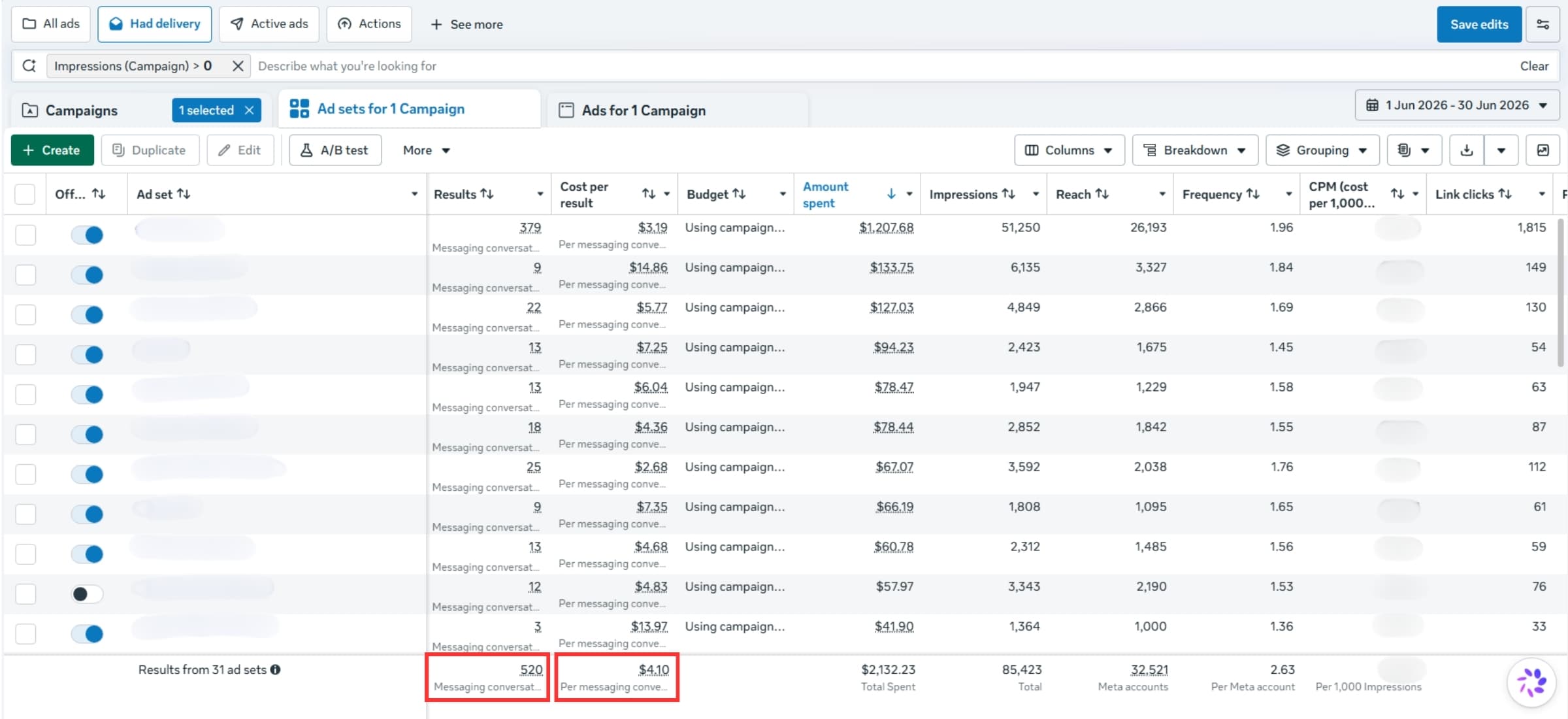
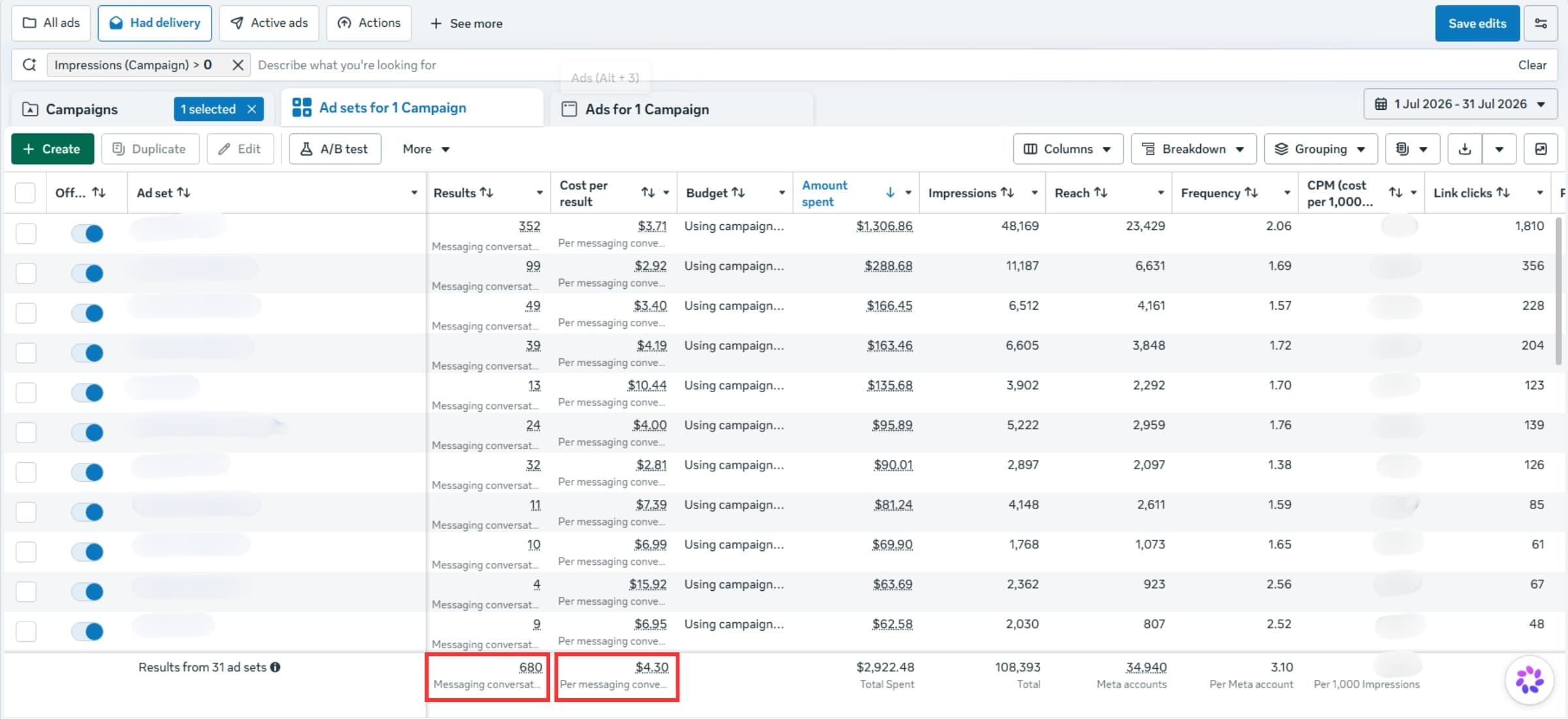
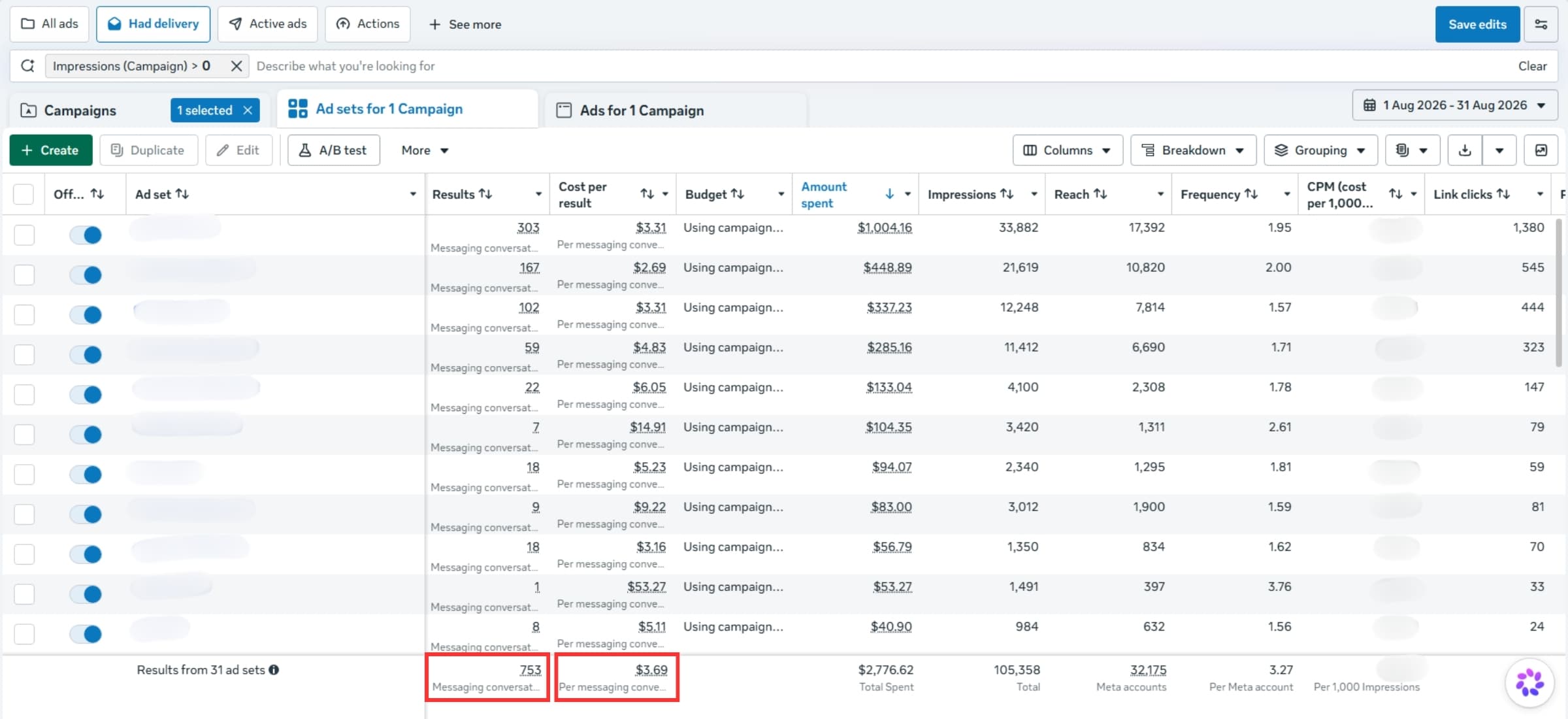
Warranty Appliance came to us running boosted posts with no account structure behind them, paying close to $8 for every result. In the first three months on Meta Ads, we rebuilt the foundation, cut acquisition cost by 60%, and scaled spend 2× without losing efficiency.
- 3×
- Resultsagainst the pre-engagement baseline
- −60%
- Cost per acquisitionfrom ~$8 to under $4
- 6+
- ROASreturn on ad spend
The starting point
Before working with us, Warranty Appliance's Meta presence was built entirely on boosted posts. There was no campaign structure behind the spend: no funnel logic, no audience segmentation, no testing process. Every post got a bit of budget pushed behind it, and the results were whatever they were.
That approach showed up directly in the numbers. CPMs were high, and cost per acquisition sat close to $8, expensive enough to eat into margin on every unit sold. Without structure, there was no way to tell which creative or audience was actually driving results, and no way to add budget without CPA climbing right along with it. The account needed a real foundation before it could scale.
What we did
Rebuilt the account from the ground up
We replaced the boosted-post approach with a properly structured Meta Ads account, with campaigns and ad sets organised around how people actually move toward a purchase instead of one bucket of spend behind whatever post went up that week.
Put creative on a testing cadence
Rather than running the same handful of posts, we introduced a steady stream of new ad creative on a fixed schedule, testing angles, formats, and offers against each other instead of guessing which one would work.
Optimised continuously, not occasionally
With structure and fresh creative in place, we kept tightening the account week over week: reallocating budget toward what was working, cutting what wasn't, and refining targeting as the data came in.
The results
In the first three months, the rebuilt account delivered 3× the results of the pre-engagement baseline, while spend increased 2×, not the other way around.
That combination is the real story: efficiency improved as spend went up, which is what turned a short-term fix into an ongoing partnership.
Scale and efficiency aren't a trade-off; they're sequential. An account with no structure or testing framework gets more expensive every time you add budget to it. Fix the foundation first, and added spend compounds results instead of diluting them.